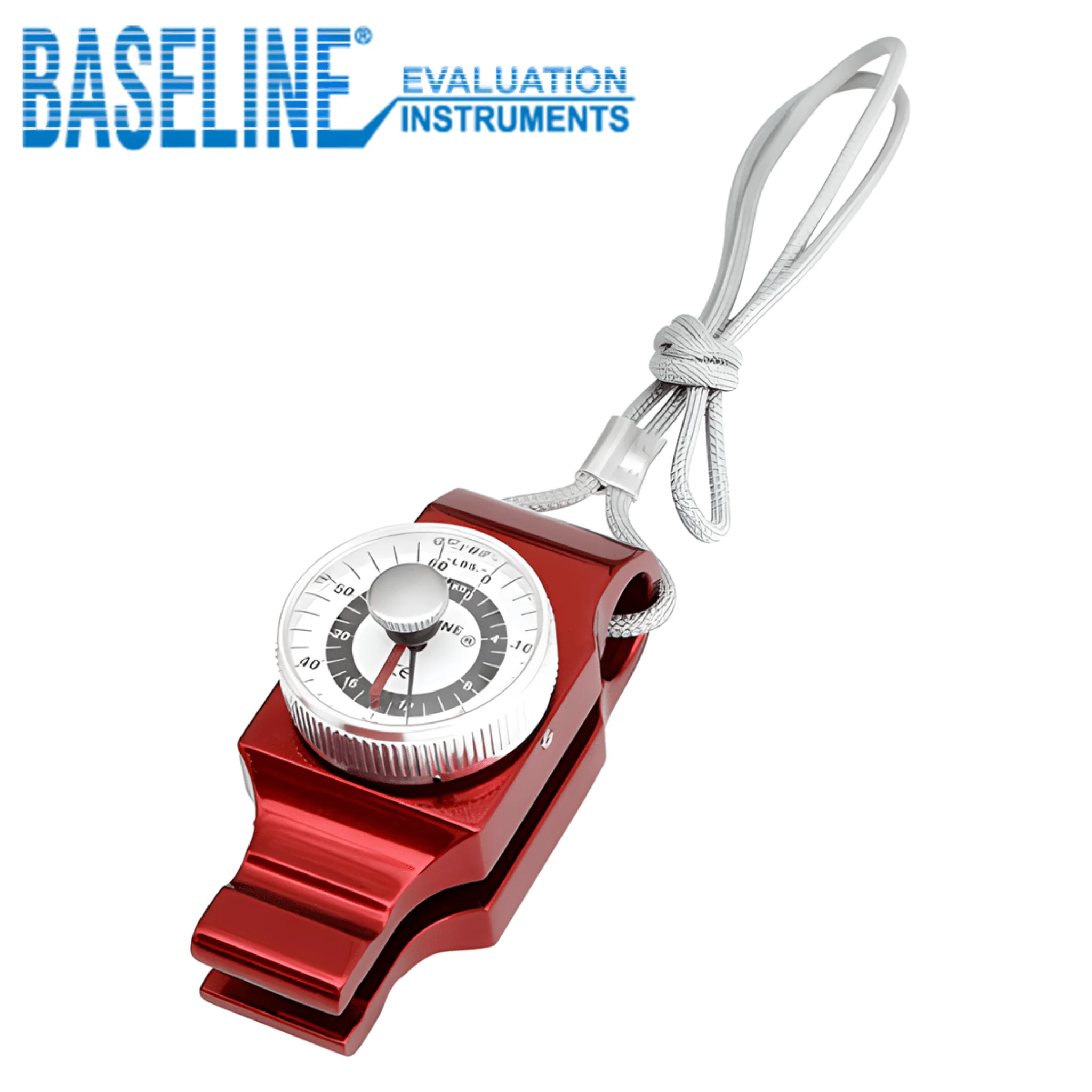
Baseline Mechanical Pinch Gauge (2lb, 10lb. 30lb, 60lb Capacity)
The Baseline Mechanical Pinch Gauge is a clinically trusted hand-strength assessment tool, widely used by physical therapists, occupational therapists, hand surgeons, and rehab professionals to measure pinch force (tip, key, and palmar pinches). It’s a mechanical force gauge that outputs consistent, repeatable results — a standard tool for hand function evaluation, tracking recovery, and designing treatment plans.
Whether you’re assessing a healthy patient’s grip, monitoring post-injury recovery, or establishing baseline hand strength, this pinch gauge delivers reliable, quantifiable metrics in a compact, portable format.
-
Measures multiple pinch types: Supports tip pinch (thumb-index tip), key pinch (thumb pad to side of index), and palmar pinch — giving therapists a full profile of pinch strength.
-
Dual-unit readout: Readings can be displayed in pounds (lb) or kilograms (kg) — convenient for both U.S. and international clinical settings.
-
Accurate & repeatable: The mechanical gauge delivers consistent results that align with peer-reviewed normative data (e.g. published studies by Mathiowetz / Jamar) used in hand‐function research and clinical assessment.
-
Maximum-force indicator: Once the subject completes the pinch test, the gauge’s red maximum pointer “locks” at the highest recorded force, remaining until manually reset — useful for documenting peak force in assessments.
-
Multiple capacity options: Available in a range of force capacities depending on patient strength needs — e.g. 2 lb (for very weak hands), 10 lb, 30 lb (standard), or 60 lb (for stronger patients or athletes).
-
Compact, lightweight & portable: Typical dimensions around 6″ × 2″ × 4″; weight around 2 lbs — easy to store, transport, and include in therapy kits.
-
Made in USA & CE-Certified: Manufactured domestically in the United States and carries CE certification for quality and safety.
-
Comes with protective carrying case: Convenient for clinics, home-care use, or mobile therapists.
Why It’s Useful / Who It’s For
-
Hand therapists & rehabilitation professionals — to assess baseline or ongoing pinch strength (after injury, surgery, nerve repair, arthritis, tendon repair, etc.).
-
Orthopedic and neurologic clinics — for functional testing in conditions like nerve compression, tendon/ligament injuries, arthritis, or neuromuscular disorders.
-
Occupational therapy & ergonomics — to measure pinch strength for return-to-work assessments or ADL (activities of daily living) evaluations.
-
Research & clinical studies — provides data consistent with standard norms, enabling comparison across studies and populations.
-
Athletic / sports medicine settings — for grip/pinch assessment as part of hand-strength conditioning or rehabilitation for athletes (e.g. rock climbers, ball-sports, manual-labor).
Its broad capacity range (2 lb to 60 lb) and multiple pinch modes make it valuable for patients from those with very weak grip (e.g. post-surgery, elderly) to those with strong hands (e.g. athletes).
How to Use
-
Before the test, zero the gauge using the dial indicator so the black pointer aligns with zero.
-
Ensure the red maximum-force indicator is reset (turn the small reset knob) so it will register the next maximum force applied.
-
Have the patient or subject perform the desired pinch (tip, key, or palmar) using proper positioning and consistent technique.
-
The gauge displays the force in pounds or kilograms; the maximum force remains until manually reset — ideal for documentation, comparison over time, or progress tracking.
Dimensions: 6″ x 2″ x 4″
Weight: 2 lbs
Colors & Capacity: Gold 2lb, Silver 10lb, Blue 30lb, Red 60lb